TRIALS & PROJECTS
Local evidence for local farming.
When ferries are delayed, Jersey’s supermarket shelves are empty fast. A more resilient island food system needs more food grown, processed and supplied here, with farming systems that work in our soils, climate and markets.
Most farming research happens somewhere else, under different conditions. We run practical trials on Jersey farms, and projects that add value to what the island already produces, so local farmers are supported in making decisions based on local evidence.
RESEARCH
2026 Farming for the Future field trials at Le Tacheron
What we’ve been testing this year, and what we found.
HARVESTED JULY 2026
Potato companion plants
The question
Can a low-rate mix of companion plants, grown among the potatoes, support the crop and the soil without cutting yield?
What we did
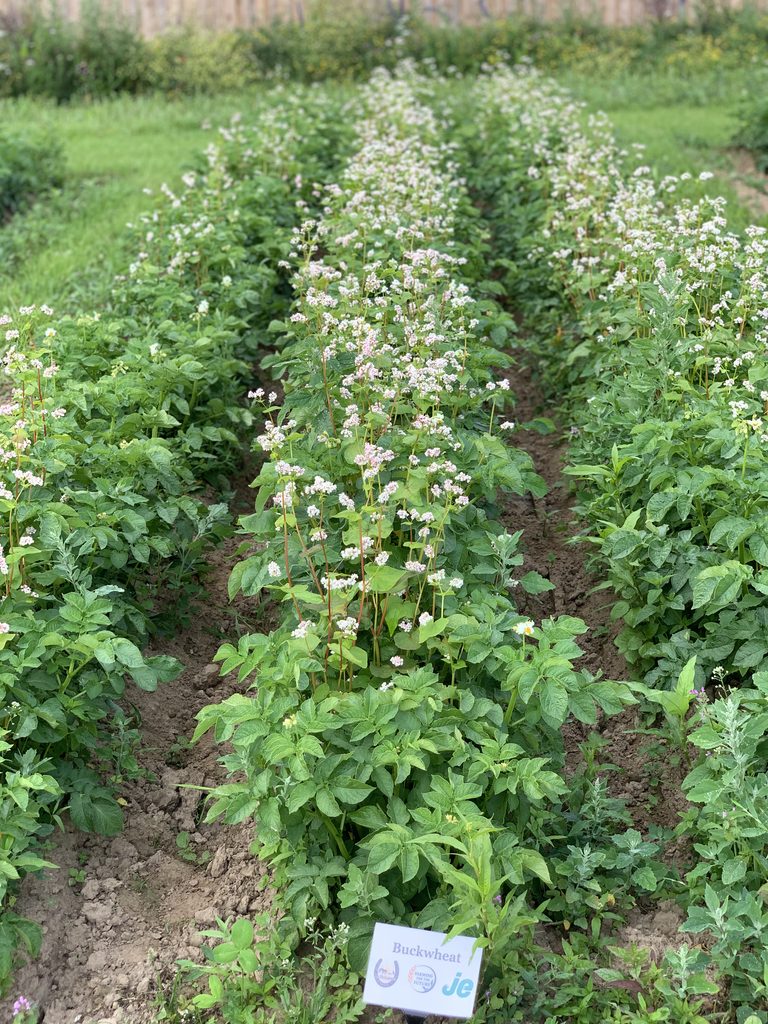
On a one-vergée organic plot we grew Orla potatoes with buckwheat, with legumes (lupin, field pea, vetch and broad bean), or with both, sown at a very low rate, in replicated beds alongside potatoes on their own. All the companions were sown in the trench at the same depth as the seed potatoes.
What we found
Contrary to popular belief, the companions did not reduce yield! But they did change crop quality: buckwheat beds had the least waste, legume beds the most. Buckwheat also kept the soil measurably moister through a very dry summer.
HARVESTED JULY 2026
Sap analysis & foliar nutrition
The question
Can testing the plant’s sap, and feeding it through the leaves, keep an organic potato crop healthy and productive with fewer inputs?
What we did
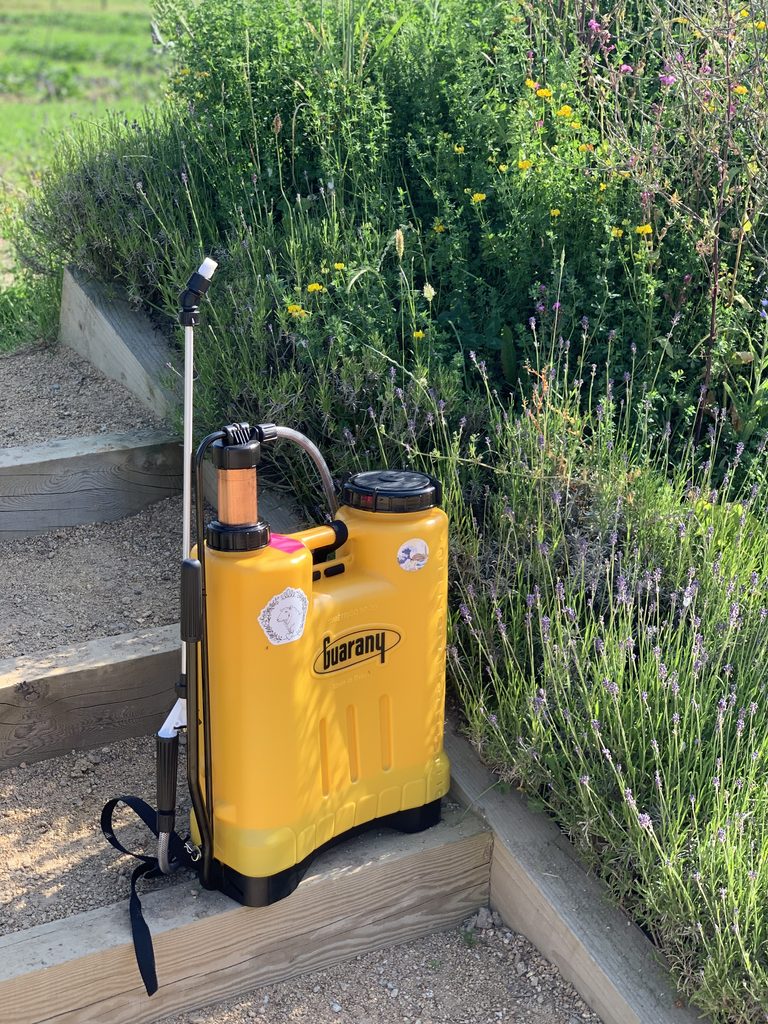
Lab sap tests showed the potato plants were short of calcium and molybdenum, so nitrate was building up in the leaves just as blight arrived. We corrected this with targeted foliar sprays that we designed and mixed in-house.
What we found
Blight stopped spreading in the sprayed beds, while unsprayed beds had more disease. The organic crop yielded nearly 4 tonnes per vergée (21 t/ha), 80% marketable, on less than half the usual nitrogen, at about £1,600 per vergée against about £2,500 for conventional Royals.
LESSON LEARNED
Flax & chickpea intercropping
The question
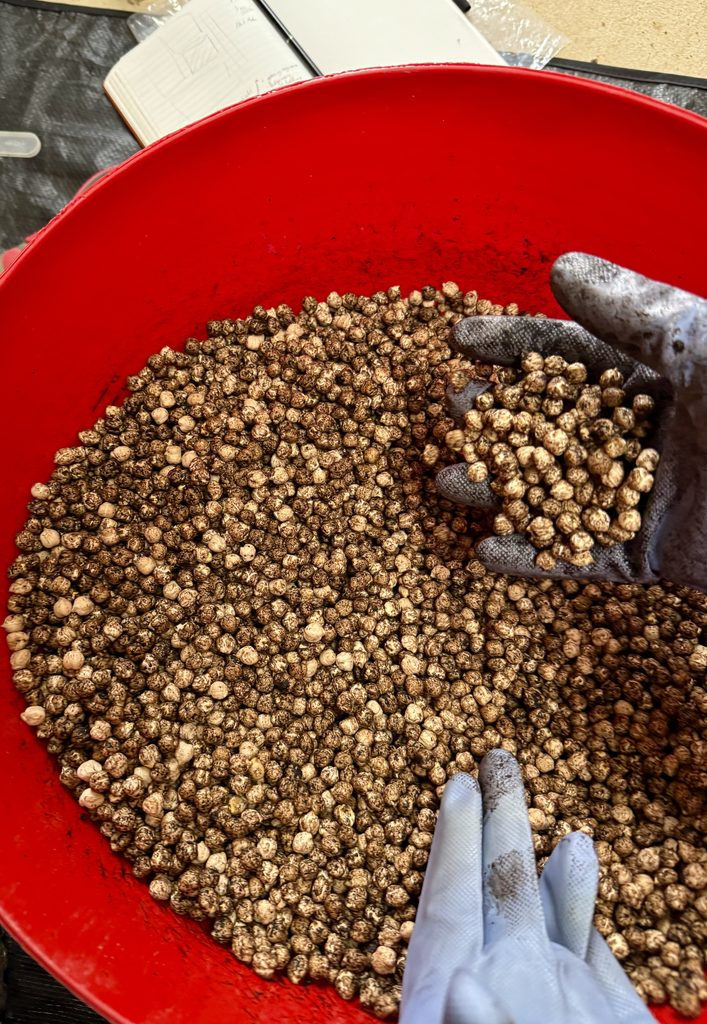
Our 2025 trial showed chickpeas will grow in Jersey, but they’re sensitive to soil conditions. Can they give a good, marketable yield, and do they do better grown with flax?
What we did
Chickpea and flax were planted as an intercrop of three rows of flax to one of chickpea. Chickpeas were inoculated with their own specific rhizobia (partner bacteria) and an in-house seed treatment.
What we found
Crows love nutritious chickpeas, and they’re very good at getting them. We had very fast emergence in 5 days (the seed treatment worked) but then we watched as the crows used the emerging seedlings as hooks to pull up the juicy seeds… Next time we’ll protect the crop with a light fleece and sow deeper!
Looking ahead to 2027
These were deliberately small, intensively monitored and measured trials. We plan to move to field-scale trials with our potato programme on several farms next year, and to work with Organic Jersey Royals planted in February. We also hope to expand the sap analysis service to more crops and growers, as the insight available with this method is a real gamechanger.
PROJECTS
Adding value to what Jersey already produces
Alongside our field trials, we work with farmers on projects that build new markets and keep more value on the island.
ONGOING
Funded by the Jersey Community Foundation
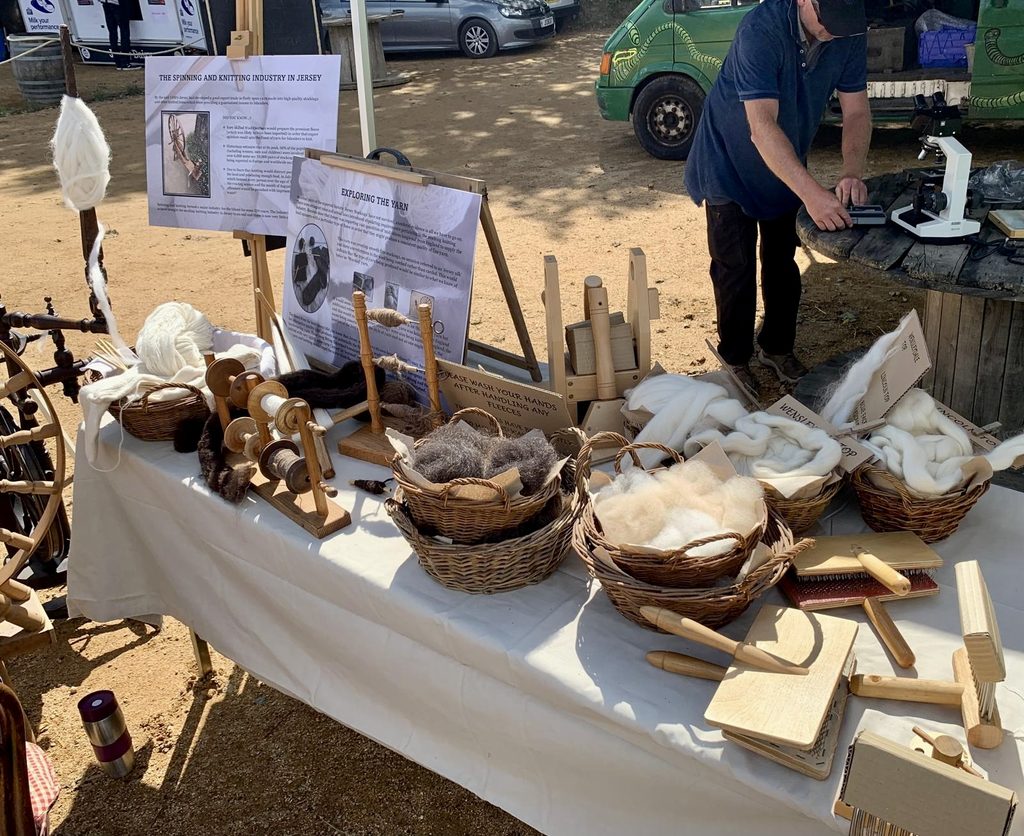
The Jersey Wool Project
The question
Jersey’s fleeces are often treated as a by-product with little value. Could they become a valued local product instead?
What we’re doing
Working with three partner farms to explore what processing their fibre is best suited to, with the aim of producing authentic local products that revitalise the woollen heritage of Jersey.
Partner farms
Field Farm · Panigot Farm · Le Tacheron
What we found
We are excitedly waiting for the return of the Jersey woollen fibres on Island after processing at mills in England. Look out for Jersey yarn at the Christmas Markets as well as woollen themed community craft sessions advertised soon!
How we can work with you
Whether you farm, fund, or run a land-based project, there’s a way to get involved.
R&D funding applications
We help find funding for land-based projects and write the applications, with the science built in from the start.
Farm clusters
We bring farmers together to share what works, tackle common problems and run research as a group.
Monitoring & evaluation
Independent, scientific monitoring that shows whether a project is working with evidence funders can trust.
Host a trial on your farm
Got a field and a question? We’ll design a fair trial with you, run the measurements and share the results.
Partners & funders
Thank you to the Le Maistre family at Le Tacheron, who gave us land, labour, machinery, advice and endless good spirits; to Jersey Electricity for part-funding our 2026 trials; to the Jersey Community Foundation for funding the Wool Project; and to all the farmers who’ve worked with us so far.


Got a question you’d like answered on your land?
Tell us what you’re wondering about, and we’ll help you find out.